2025-26
Liga Endesa
Champions
Copa dEL REY
Semifinals
euroleague
1/2 Final Four
SUPERCOPA ENDESA
Champions
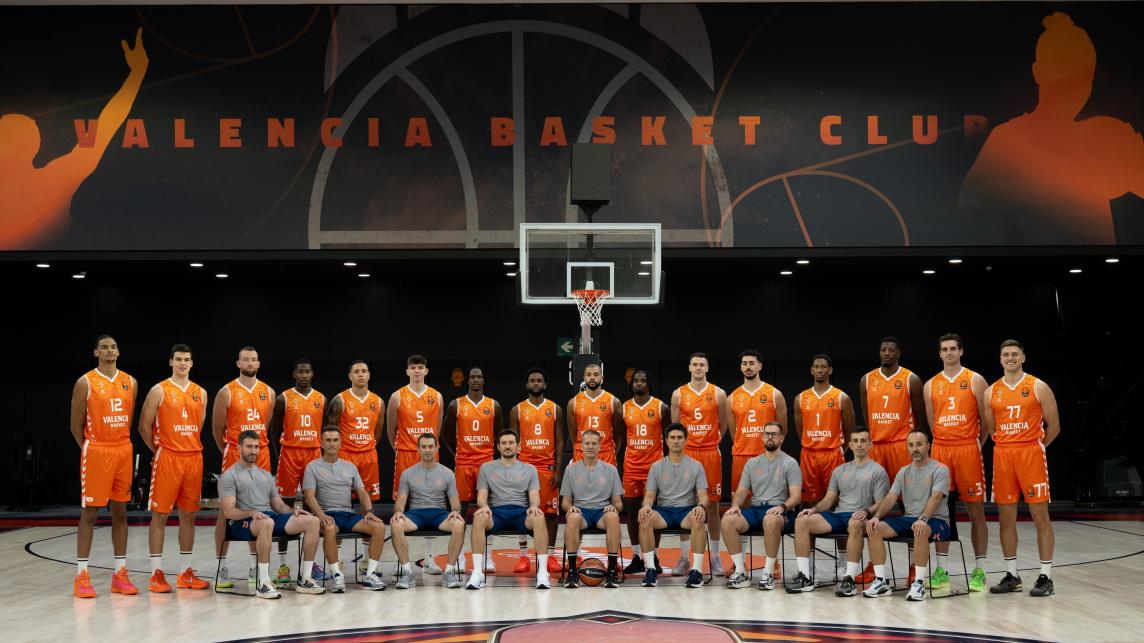
The season began with one of the most significant changes in the club's history: the move from La Fonteta—home to the club's games from 1987 to 2025—to the new and huge Roig Arena, located just meters away with a maximum capacity of 15,600 spectators.
The squad remained under the leadership of Pedro Martínez and his coaching staff, retaining a core group of players from the previous year: Jean Montero, Sergio de Larrea, Brancou Badio, Josep Puerto, Xabi López-Arostegui, Jaime Pradilla, Matt Costello, Nate Sestina, and Nate Reuvers.
On the backcourt, two players arrived from Turkey: point guard Darius Thompson from Anadolu Efes and shooting guard Omari Moore from Darüşşafaka. For the small forward position, Kameron Taylor joined from Unicaja, while Isaac Nogués arrived from the United States. In the frontcourt, there were two further additions: Neal Sako from the French club ASVEL and Yankuba Sima from Unicaja.
Injuries plagued the team during the preseason, forcing four players to the sidelines before the Supercopa Endesa in Málaga. This led to the temporary signing of two players: the Hungarian Valerio-Bodon—who provided support but did not make his debut—and American point guard Ike Iroegbu, who played regularly during that first month. Despite these absences—missing Montero, Badio, Xabi, and Sima—the team brilliantly secured the season's first title by defeating hosts Unicaja in the semifinals and Real Madrid in the final; it was a sign of a high-flying season to come.
With the title secured, the Roig Arena opened its doors, ushering in a new era for Valencian basketball. Inaugural games against Virtus Bologna and FC Barcelona resulted in back-to-back victories amidst an atmosphere of great anticipation and excitement. An attendance of nearly 15,000 fans set a record never before seen in the city's basketball history. Shortly thereafter, there was another adjustment to the squad's frontcourt. Nate Sestina left the club, while Braxton Key arrived from the United States.
With the first team putting together a remarkable season in both the Liga Endesa and a grueling EuroLeague, Valencia prepared to host the Copa del Rey for the first time in 23 years. In a spectacular tournament—ultimately won by Kosner Baskonia—Valencia Basket defeated Joventut de Badalona in the quarterfinals but missed out on a home-court final appearance due to a poor showing in the dying seconds of the semifinal against Real Madrid.
Having moved past that setback, the season continued at a breakneck pace in both competitions. The EuroLeague regular season—an incredible campaign during which the Taronja even topped the standings among Europe's elite 20 teams—was drawing to a close. Victories at tough venues like Olympiacos and Panathinaikos, combined with the Roig Arena serving as a near-impregnable fortress, fueled dreams of a historic season. A final victory over Dubai in Zenica (Bosnia and Herzegovina) secured a historic second-place finish, guaranteeing home-court advantage in the EuroLeague quarterfinals for the first time ever.
Standing in their way was a formidable Panathinaikos side: the team with the highest budget in the EuroLeague, featuring a marquee signing in Nigel Hayes-Davies—fresh from the NBA—and a star-studded roster led by Ergin Ataman. The best-of-five series would go down in history. The Greeks won the first two games at the Roig Arena, where the home crowd had been fully behind their team. Hayes-Davies himself hit a buzzer-beater to make it 0–2, seemingly signaling the end of a beautiful dream. Nothing could have been further from the truth.
Valencia Basket headed to Athens determined to extend the series—and they certainly did. In Game 3, the Taronja withstood every surge from the home team to claim a victory marked by the simultaneous ejections of coaches Pedro Martínez and Ataman—a moment that would be etched in memory for years to come. In Game 4, the Taronja once again triumphed over the "hell" of the OAKA, sending the series back to Valencia for a decisive fifth game. Inside a packed Roig Arena—filled with 15,000 shirts bearing the slogan "Llarg serà el camí" and a recognizable silhouette—Valencia Basket completed their comeback in a game that will forever remain in our memories. The series stood at 3–2, securing a ticket to the first Final Four in the club's history—an event that, paradoxically, would be held at the OAKA itself, the home of Panathinaikos.
Just two weeks after this whirlwind of emotions, the Taronja squad packed their bags—filled with high hopes—to experience their first EuroLeague Final Four in their 40-year history. They were bound for Athens, the destination for only the four best teams in Europe, where they would compete alongside Real Madrid, Olympiacos, and Fenerbahçe Beko. The Taronja played in the second semifinal game, where a more experienced Real Madrid side secured the ticket to the final. For the first time in many years, the third-place playoff was not held, meaning the Taronja’s best-ever European run in the men's game concluded with that semifinal appearance.
Returning to domestic reality, Valencia Basket had to dig deep to secure a strong position in the Liga Endesa regular season; balancing the league with the EuroLeague playoffs had led to a few slip-ups that even jeopardized their home-court advantage for the quarterfinals.
Before this final stretch, there was one last addition to the roster. Point guard Álvaro Cárdenas—originally signed in the summer but loaned to the Greek club Peristeri—returned from his loan spell and joined the first team directly, making an immediate impact.
A strong finish to the season, highlighted by a massive victory at the Palau Blaugrana, allowed them to secure second place in the regular season standings. A win at the Palau Blaugrana—now, where have I heard that before? Let’s move on.
Once in the playoffs, the quarterfinal draw pitted the team against Jaume Ponsarnau’s surprising Surne Bilbao squad. After a grueling first game at the Roig Arena—where the Taronja had to overcome a 13-point deficit in the final six minutes—Valencia Basket sealed the series in Bilbao with a commanding performance, winning 2-0 and advancing to the semifinals.
In the semifinals, Asisa Joventut, led by Ricky Rubio, awaited them. The first game, played at the Roig Arena, was another ode to the sport of basketball, ending in a thrilling 118-117 victory for the Taronja after overtime. In the second and third games, Pedro Martínez's squad demonstrated a superior level of play, securing their ticket to the grand final at the Olímpic with 250 Taronjas cheering from the stands.
The final—against a powerhouse like FC Barcelona and, once again, with home-court advantage—promised high drama. It began with a spectacular opening game such as the semi-finals were, though with a different outcome. Barça claimed the game 112–113 in overtime, snatching away home-court advantage. Valencia Basket responded emphatically, winning the second game 102–75 and leveling a series that was now set to move to Barcelona for at least the next two games.
Valencia Basket fans snapped up travel packages for the two final games in minutes, eager to cheer the team on and cap off a season that was already historic in grand fashion. Determined to maintain their momentum, the team won the third game 80–88, overcoming the home side's push and moving within a single victory of glory. Two days later—with over 500 Taronja fans filling the stands at the Palau Blaugrana and another 6,000 watching from the Roig Arena—Valencia Basket dealt the final blow, winning by an unforgettable 84–108 margin and sparking a celebration on the court and in the stands that would live on forever. Josep Puerto and Jaime Pradilla had secured the second Liga Endesa title in Valencia Basket’s history—a triumph that would be celebrated with thousands of Taronja fans in the city the following day.